
Co-refining Market Growth Accelerates with Advancements in Renewable Fuel Production and Refinery Modernization
The global refining sector is undergoing a significant transformation as industries and governments intensify efforts to reduce carbon emissions and develop sustainable energy solutions. Traditional petroleum refineries are increasingly adopting renewable feedstocks and advanced processing technologies to align with global climate goals. This transition has fueled the rapid expansion of the co-refining market, which is emerging as a vital component of the low-carbon energy ecosystem.
Co-refining, also known as co-processing, involves the simultaneous processing of renewable feedstocks and conventional crude oil in existing refinery units. Renewable materials such as biomass oils, waste plastics, vegetable oils, animal fats, and used cooking oils are integrated into refinery operations to produce cleaner fuels and petrochemical products. By utilizing existing infrastructure, co-refining provides an economically efficient pathway for reducing greenhouse gas emissions while meeting growing energy demand.
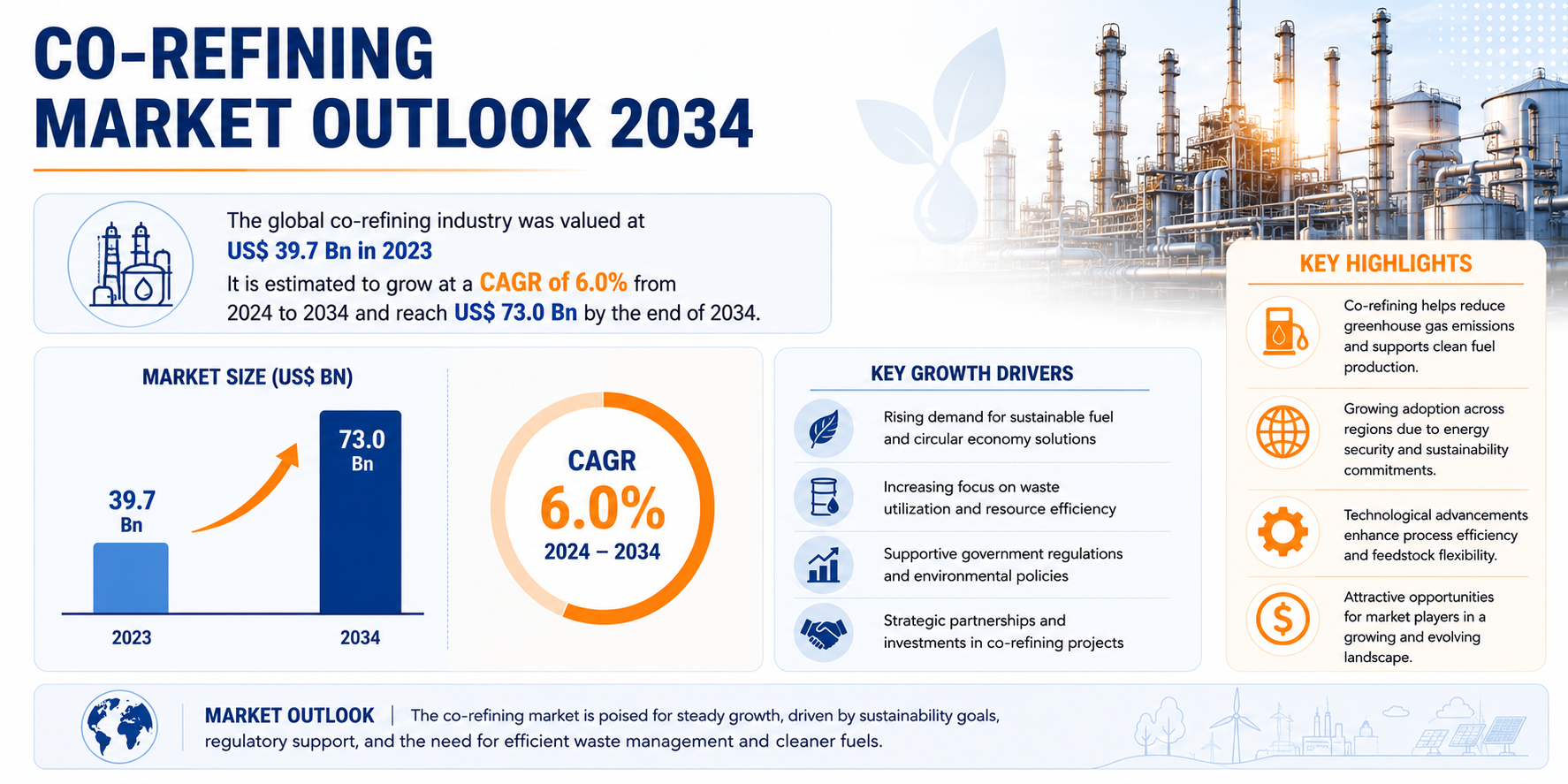
The global co-refining market was valued at US$ 39.7 Bn in 2023 and is projected to reach US$ 73.0 Bn by 2034, growing at a CAGR of 6.0% during the forecast period. Rising investments in biofuel production, supportive government policies, and increasing demand for sustainable transportation fuels are among the key factors driving market growth.
Increasing Focus on Decarbonization
One of the most important factors driving the co-refining market is the worldwide push toward decarbonization. Governments, corporations, and environmental organizations are working to reduce carbon emissions in order to combat climate change and achieve net-zero targets.
The transportation industry remains a major source of greenhouse gas emissions globally. Conventional gasoline, diesel, and aviation fuels contribute significantly to air pollution and climate-related concerns. As a result, policymakers are implementing stricter fuel quality regulations and renewable energy mandates to encourage the adoption of low-carbon alternatives.
Co-refining technologies help refiners reduce the carbon intensity of transportation fuels by incorporating renewable feedstocks into conventional refining systems. This approach allows companies to transition gradually toward sustainable fuel production without replacing existing refinery infrastructure.
Many countries are also investing heavily in renewable hydrogen, carbon capture and storage, and advanced fuel technologies. These investments are creating favorable conditions for co-refining market expansion.
The growing adoption of electric vehicles is another factor influencing refinery modernization strategies. Although electric mobility is expected to reduce long-term gasoline demand, liquid fuels will continue to play a crucial role in aviation, shipping, and heavy-duty transportation. Co-refining enables refiners to remain competitive by producing cleaner fuels for these sectors.
Rising Adoption of Biofuels
The increasing use of biofuels is significantly contributing to the growth of the co-refining market. Biofuels are considered one of the most practical solutions for reducing emissions from difficult-to-decarbonize industries such as aviation and marine transportation.
Renewable diesel, biodiesel, bioethanol, and sustainable aviation fuel are among the primary products generated through co-refining processes. These fuels offer lower lifecycle carbon emissions compared to conventional petroleum products, making them attractive to governments and businesses seeking sustainable alternatives.
Airlines around the world are rapidly increasing their use of sustainable aviation fuel in order to comply with international carbon reduction targets. Co-refining technologies allow existing refineries to produce SAF using renewable feedstocks such as used cooking oil and vegetable oils, reducing the need for entirely new production facilities.
Similarly, renewable diesel demand is increasing due to stricter environmental regulations in road transportation. Many countries have introduced blending mandates requiring fuel suppliers to include renewable components in transportation fuels.
Biofuel adoption is also helping countries improve energy security by reducing dependence on imported fossil fuels. Domestic renewable fuel production creates economic opportunities while supporting agricultural and waste management sectors.
Advantages of Co-refining Technologies
Co-refining offers several operational and economic advantages compared to standalone renewable fuel production systems.
Utilization of Existing Infrastructure
One of the biggest advantages of co-refining is the ability to use existing refinery infrastructure. Refineries can integrate renewable feedstocks into conventional processing units without constructing entirely new facilities.
This reduces capital expenditure and allows refiners to scale renewable fuel production more quickly.
Lower Carbon Emissions
Co-refining helps lower greenhouse gas emissions by replacing a portion of fossil feedstocks with renewable materials. Renewable feedstocks generally have lower carbon intensity and can significantly reduce lifecycle emissions.
Operational Flexibility
Co-refining systems can process a variety of feedstocks depending on availability and market conditions. This flexibility enables refiners to optimize operations and respond to changing energy demands.
Support for Circular Economy
Waste plastic co-refining and biomass utilization contribute to circular economy objectives by converting waste materials into valuable fuel products. This reduces landfill waste and promotes resource efficiency.
Faster Commercialization
Because co-refining uses established refining technologies and infrastructure, commercialization timelines are shorter compared to new bio-refinery projects.
These advantages are encouraging more refinery operators to invest in co-refining technologies worldwide.
Feedstock Segments Driving Market Development
The co-refining market includes several feedstock categories that contribute to overall industry growth.
Crude Oil Co-refining
Crude oil co-refining remains the dominant segment due to the extensive global network of petroleum refineries. Renewable feedstocks are blended with crude oil during processing to reduce fuel carbon intensity.
This approach allows refiners to maintain operational continuity while meeting environmental standards.
Biomass Co-refining
Biomass feedstocks such as forestry residues, agricultural waste, and algae-derived oils are increasingly being used in renewable fuel production. Biomass co-refining supports sustainable resource utilization and helps reduce dependence on fossil fuels.
Waste Plastic Co-refining
The growing plastic waste crisis has accelerated interest in waste plastic co-refining technologies. Plastic waste can be converted into useful hydrocarbons through catalytic cracking and pyrolysis processes.
This approach not only addresses environmental pollution but also creates economic value from discarded materials.
Renewable Feedstock Co-refining
Renewable feedstocks including vegetable oils, animal fats, and used cooking oils are widely used in the production of renewable diesel and sustainable aviation fuel.
As global feedstock supply chains continue to expand, renewable feedstock co-refining is expected to witness strong growth during the forecast period.
Technological Processes Supporting the Market
Several advanced refining technologies are driving innovation and efficiency in the co-refining market.
Hydroprocessing
Hydroprocessing is among the most widely used co-refining methods. The process treats feedstocks with hydrogen under high pressure to remove impurities and improve fuel quality.
Hydroprocessing is particularly effective for producing renewable diesel and aviation fuel with low sulfur content.
Catalytic Cracking
Catalytic cracking converts heavy hydrocarbons into lighter and more valuable fuel products. The technology is widely used for waste plastic conversion and fuel upgrading applications.
Its lower energy requirements and high efficiency make it attractive for sustainable refining operations.
Fluid Catalytic Cracking
Fluid catalytic cracking units are commonly used in petroleum refineries to produce gasoline and petrochemical feedstocks. FCC systems are increasingly being adapted to process renewable feedstocks alongside conventional hydrocarbons.
Hydrotreating
Hydrotreating removes contaminants such as sulfur and nitrogen from feedstocks and fuel streams. The process helps refiners comply with strict fuel quality regulations.
Increasing global emphasis on ultra-low sulfur fuels is boosting demand for hydrotreating technologies.
Hydrocracking
Hydrocracking is a more severe refining process that converts heavy hydrocarbons into lighter fuels with improved quality. The process increases fuel yields while reducing environmental impact.
Continuous improvements in catalysts and process efficiency are expected to strengthen hydrocracking applications in co-refining operations.
Europe Leads the Global Market
Europe accounted for the largest share of the global co-refining market in 2023. Strong environmental regulations, renewable energy policies, and investments in clean fuel technologies have positioned the region as a leader in sustainable refining.
The European Union has introduced ambitious carbon reduction targets aimed at lowering transportation emissions and increasing renewable fuel adoption. These policies are encouraging refineries to accelerate integration of renewable feedstocks into operations.
Europe also benefits from well-developed recycling and waste collection systems that support the availability of renewable feedstocks such as used cooking oil and waste plastics.
Additionally, investments in carbon capture and storage projects are supporting the transition toward low-carbon refining infrastructure across the region.
The rising production of sustainable aviation fuel is expected to further strengthen Europe’s market position in the coming years.
North America Emerging as a Strong Growth Region
North America is witnessing significant growth in the co-refining market due to increasing investments in renewable fuel production and refinery modernization.
The United States government is actively supporting clean energy development through hydrogen initiatives, carbon reduction programs, and renewable fuel incentives. Several major refiners are expanding renewable diesel and sustainable aviation fuel production capacities.
Canada is also investing in low-carbon energy infrastructure and sustainable transportation initiatives, contributing to regional market growth.
Technological innovation and strong policy support are expected to drive further market expansion across North America.
Asia Pacific Gaining Momentum
The Asia Pacific region is emerging as a promising market for co-refining technologies. Rapid industrialization, rising transportation fuel demand, and growing environmental awareness are encouraging countries such as China, India, and Japan to invest in sustainable fuel production.
Governments in the region are implementing renewable energy policies and supporting refinery modernization projects to reduce emissions and improve energy security.
Increasing concerns regarding plastic waste management are also creating opportunities for waste plastic co-refining technologies in the region.
Competitive Landscape
The global co-refining market is highly competitive and includes several major energy companies and refining corporations.
Leading companies are investing in refinery upgrades, advanced catalysts, and renewable feedstock integration technologies to strengthen market positions. Strategic collaborations and joint ventures are becoming increasingly common as companies seek to accelerate sustainable fuel production.
Research and development activities are focused on improving process efficiency, expanding feedstock compatibility, and reducing operational costs.
Growing demand for sustainable aviation fuel is also encouraging refiners to develop specialized co-processing capabilities.
Challenges in the Market
Despite strong growth prospects, the co-refining market faces certain challenges.
Feedstock supply and pricing volatility remain major concerns for refiners. Competition for renewable feedstocks from food and chemical industries can affect availability and costs.
Technical challenges associated with processing certain bio-based materials may require additional refinery modifications and specialized catalysts.
High capital investment requirements for refinery upgrades may limit adoption among smaller operators.
Regulatory uncertainty in some regions could also impact long-term investment planning and market development.
However, ongoing technological innovation and government support are expected to help overcome these obstacles over time.
Future Outlook
The future of the co-refining market looks highly promising as global industries continue prioritizing sustainability and carbon reduction.
Demand for renewable diesel, sustainable aviation fuel, and low-carbon transportation fuels is expected to rise substantially over the next decade. Co-refining technologies provide an efficient and scalable pathway for meeting this demand while utilizing existing refinery assets.
Advancements in hydroprocessing, hydrogen production, and catalyst technologies are likely to improve operational efficiency and reduce production costs.
In addition, circular economy initiatives promoting waste plastic recycling and biomass utilization will create new opportunities for market expansion.
As environmental regulations become more stringent and industries pursue net-zero strategies, co-refining is expected to become an increasingly important component of the future global energy system.

 English
 Arabic
 French
 Spanish
 Portuguese
 Deutsch
 Turkish
 Dutch
Dutch
 Italiano
 Russian
 Romaian
 Greek
Greek