
Unlocking Value: A Deep Dive into Data Centre Service Revenue
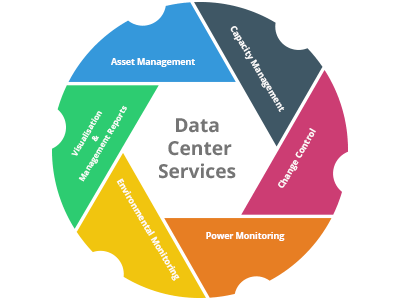
The impressive and consistent financial performance of the data centre service industry is underpinned by a set of highly scalable and often recurring commercial models that have evolved to meet the diverse needs of the market. A detailed analysis of Data Centre Service revenue models reveals several key streams that power the industry's multi-billion-dollar valuation, from the long-term, predictable income of colocation contracts to the highly flexible, consumption-based revenue of the public cloud. Understanding these different financial structures is key to appreciating the economic dynamics of the market and the different value propositions offered by the various players in this critical infrastructure ecosystem, each of whom has tailored their model to a specific segment of enterprise IT demand.
For the colocation providers, the primary revenue stream is derived from long-term lease agreements for space, power, and cooling. The core product is the "cabinet," "cage," or "private suite" where a customer can house their IT equipment. Revenue is typically generated through a recurring monthly fee that has several components. The first is a charge for the physical space itself. The second, and often largest, component is a charge for power, which is measured in kilowatts and is based on the customer's committed power capacity. A third, and highly profitable, revenue stream for these providers is interconnection services. They charge a recurring fee for the physical cross-connects that allow their customers to directly link their infrastructure to that of other tenants, carriers, and cloud providers within the same facility, creating a high-margin, sticky revenue source.
In the world of the hyperscale public cloud, the revenue model is fundamentally different and is based on a highly granular, consumption-based, pay-as-you-go approach. This is the core of the Infrastructure as a Service (IaaS) model. Customers are billed for the exact amount of computing, storage, and networking resources they consume, often on a per-second or per-hour basis. This model is incredibly attractive to customers as it eliminates any upfront costs and allows them to perfectly align their spending with their actual usage. While the pay-as-you-go model is the foundation, the hyperscalers also generate significant revenue from reserved instances and savings plans, where customers can commit to a certain level of usage over a one- or three-year term in exchange for a significant discount, creating a more predictable recurring revenue stream for the provider.
Finally, the managed service providers (MSPs) in the ecosystem have their own distinct revenue models. These firms typically generate revenue through a recurring monthly management fee, which is often tiered based on the complexity of the environment they are managing and the level of support required. This could be a fixed fee for managing a certain number of servers in a colocation facility or a more complex model based on a percentage of a client's total cloud spend for managing their multi-cloud environment. In addition to these recurring fees, MSPs also generate significant one-time revenue from professional services, such as the initial design and migration of a client's infrastructure to a new data centre or cloud platform, which are often highly profitable, project-based engagements.
Explore Our Latest Trending Reports:
Terahertz Radiation Device Market
Testing, Inspection and Certification in Consumer Goods and Retail Market

 English
 Arabic
 French
 Spanish
 Portuguese
 Deutsch
 Turkish
 Dutch
Dutch
 Italiano
 Romaian
 Portuguese (Brazil)
 Greek
Greek