
Global Porcine Epidemic Diarrhea Vaccines Market 2026–2034 – 6.6% CAGR Amid Rising Pork Consumption & Outbreaks
Protecting the Herd, Securing the Supply: A Comprehensive Analysis of the Porcine Epidemic Diarrhea Vaccines Market
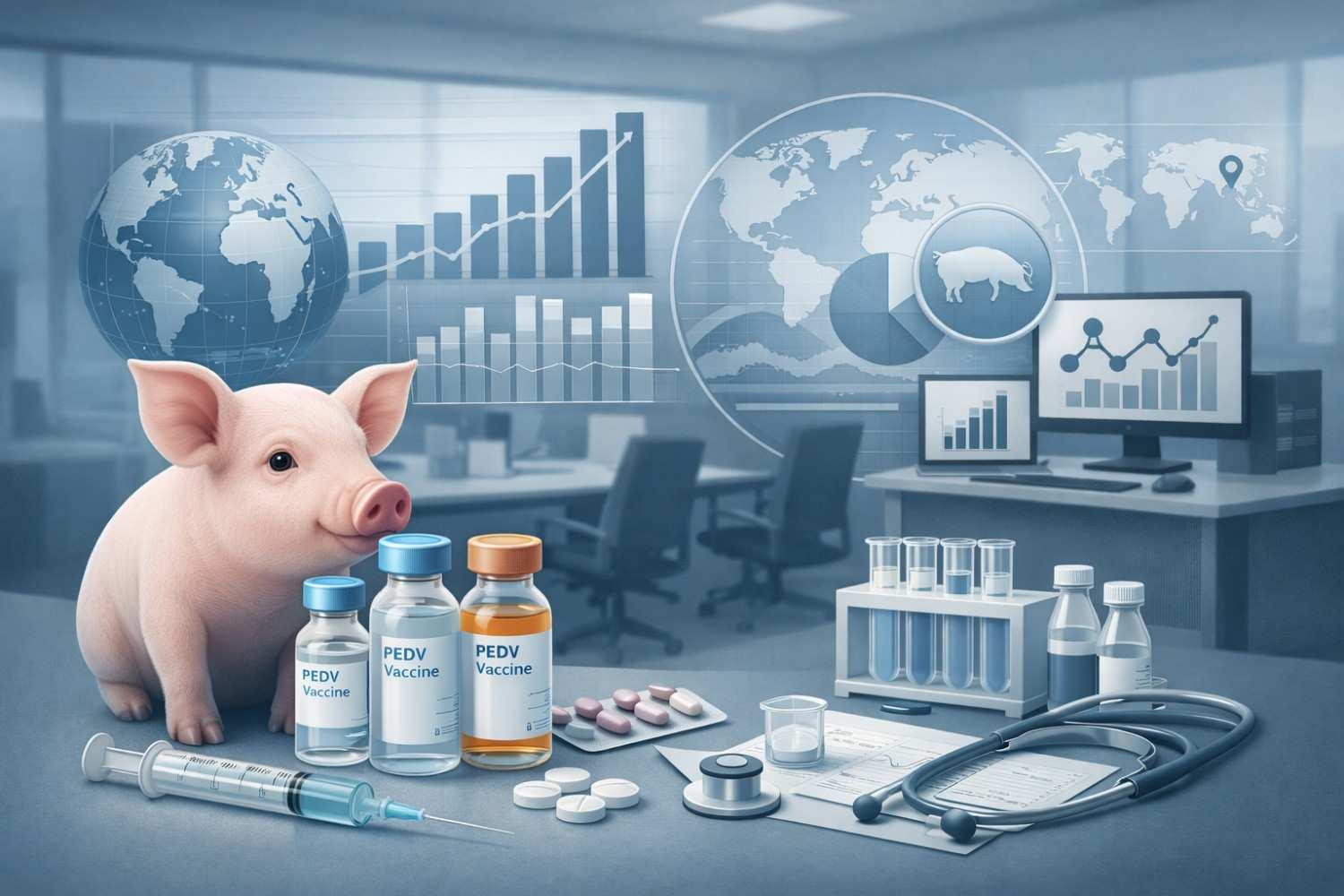
For the global pork industry, Porcine Epidemic Diarrhea Virus (PEDV) is a constant and devastating threat. This highly contagious disease can cause near-total mortality in newborn piglets, leading to massive economic losses and disrupting pork supply chains. The primary defense against this threat is vaccination. According to a detailed report by Facts & Factors, the global market for PED vaccines is on a strong growth trajectory, projected to increase from USD 1.8 billion in 2025 to USD 3.2 billion by 2034, expanding at a compound annual growth rate (CAGR) of 6.6% .
This article provides an in-depth analysis of the PED vaccines market, exploring the critical need for these products, the key drivers of growth, and the evolving landscape of swine health management.
What are Porcine Epidemic Diarrhea Vaccines?
Porcine Epidemic Diarrhea Vaccines are biological products designed to immunize pigs against the PED virus, a coronavirus that causes severe diarrhea, vomiting, and dehydration. The disease is particularly lethal in piglets under two weeks old, with mortality rates often reaching 100% in unprotected herds. Vaccines work by stimulating the pig’s immune system to produce antibodies against the virus. They are primarily of two types:
-
Live Vaccines: Contain a weakened (attenuated) form of the virus to induce a strong, comprehensive, and long-lasting immune response, including crucial mucosal immunity in the gut.
-
Killed (Inactivated) Vaccines: Contain a virus that has been inactivated, making them extremely safe, especially for use in pregnant sows, to ensure protective antibodies are passed to piglets through colostrum (first milk).
Key Market Drivers: The Unrelenting Threat to a Global Protein Source
The growth of the PED vaccines market is driven by the fundamental economic realities of modern pork production and the persistent nature of the virus.
-
High Prevalence and Economic Impact of PEDV Outbreaks: PEDV is endemic in many major pork-producing regions. An outbreak can decimate a farm’s young pig population in days, causing catastrophic financial losses from mortality, reduced growth rates, and increased management costs. This direct economic threat is the most powerful driver for vaccine adoption, as prevention is far more cost-effective than managing an outbreak.
-
Rising Global Demand for Pork: As a primary source of animal protein, global pork consumption continues to rise, particularly in Asia. This demand pressures producers to intensify operations and maximize herd health and productivity, making proactive disease management through vaccination a business imperative to ensure stable supply.
-
Focus on Protecting the Most Vulnerable: The piglets application segment dominates with a 70% share , highlighting the critical focus on protecting newborns. Vaccination strategies often center on immunizing sows so they pass on maternal antibodies, directly addressing the demographic with the highest mortality risk and securing the next generation of the herd.
Market Segmentation: Protecting the Next Generation
The market segmentation clearly illustrates the strategic focus of PED control: protecting the young through robust immunity.
By Type: The Power of Live Vaccines
-
Live Vaccines (60% Market Share): This segment dominates because live vaccines generally trigger a more robust and durable immune response that closely mimics natural infection. This is particularly important for generating the mucosal immunity in the gut, which is the first line of defense against an enteric (intestinal) virus like PEDV.
-
Killed Vaccines (40% Market Share): These play a crucial, complementary role. Their safety profile makes them the preferred choice for vaccinating pregnant sows, ensuring that maternal antibodies are safely transferred to piglets without risk to the unborn or newborn animals.
By Application: Piglets are the Priority
-
Piglets (70% Market Share): The overwhelming dominance of this segment reflects the extreme vulnerability of young pigs. The primary goal of most PED vaccination programs is to protect this cohort, either through direct vaccination or, more commonly, through maternal antibodies from vaccinated sows.
-
Adult Pigs (30% Market Share): Vaccination of adult pigs, particularly breeding sows and gilts, is a strategic necessity to build herd immunity and ensure the transfer of passive immunity to their offspring, making this segment vital for long-term farm stability.
By End-User: Large-Scale Operations Lead Adoption
-
Hog Production Farms (75% Market Share): This segment is the dominant end-user. Large, intensive farming operations with high animal densities are most vulnerable to rapid PEDV spread. For them, routine, systematic vaccination is not an option but a core component of their biosecurity and business continuity plans.
-
Veterinary Hospitals (25% Market Share): Veterinarians play a key role in diagnosing outbreaks, advising on vaccination strategies, and often distributing and administering vaccines, especially to smaller farms.
Regional Landscape: Asia Pacific at the Epicenter
-
Asia Pacific (40% Market Share): The region is the global epicenter of both pork production and PEDV risk. China, home to the world’s largest pig herd, dominates the market. Frequent and devastating outbreaks in countries like China, Vietnam, and the Philippines, coupled with the rapid intensification of swine farming, drive massive demand for effective vaccines.
-
North America: A major market with a high level of vaccine adoption, particularly in the United States, where large, technologically advanced production facilities prioritize stringent biosecurity and vaccination to protect their operations and maintain export markets after experiencing severe PEDV losses in the past decade.
-
Europe: Characterized by strong regulatory frameworks (EU) that emphasize animal health and welfare, and intensive pig farming in countries like Germany, Spain, and Denmark, leading to steady demand for high-quality, licensed vaccines.
Challenges in the Market
Despite the clear need, the fight against PEDV through vaccination faces significant scientific and logistical hurdles.
-
Viral Mutation and Strain Variation: PEDV is constantly evolving, and new strains may emerge that are not perfectly matched by existing vaccines. This can lead to reduced vaccine efficacy and “breakthrough” infections, requiring constant surveillance and periodic vaccine updates, a costly and complex process.
-
High Development and Distribution Costs: Creating, testing, and obtaining regulatory approval for animal vaccines is expensive. Furthermore, many vaccines require strict cold chain logistics to remain viable, which can be a major challenge in rural or developing regions with less reliable infrastructure, limiting access for smaller farms.
Future Opportunities: Next-Generation Protection
The future of the PED vaccines market lies in leveraging new technologies to create more effective, adaptable, and accessible solutions.
-
Novel Vaccine Technologies: There is immense potential in developing next-generation vaccines based on platforms like mRNA, recombinant proteins, or nanoparticle technology. These could offer several advantages, including faster adaptation to new viral strains, improved safety profiles, and potentially enhanced efficacy.
-
Autogenous Vaccines: The development of autogenous (custom-made) vaccines from a specific strain isolated from a particular farm or outbreak, as seen in the February 2025 example from China, offers a rapid, tailored response to emerging threats, representing a growing niche.
-
Improved Delivery and Monitoring: Innovations in vaccine delivery (e.g., mass vaccination via feed or water) and the integration of diagnostic tools to monitor immunity levels on farms can optimize vaccination schedules and improve overall herd health management.
Competitive Landscape
The market is dominated by global animal health giants alongside specialized regional players. Key companies include Zoetis Inc., Merck Animal Health, Elanco Animal Health, Boehringer Ingelheim Animal Health, and Ceva Santé Animale. Recent activities, such as Zoetis receiving research grants and conditional licenses, and Phibro Animal Health acquiring Zoetis to broaden its portfolio, demonstrate the industry’s commitment to innovation and consolidation in this critical sector.
For the full report, detailed data tables, and additional insights, visit: https://www.fnfresearch.com/porcine-epidemic-diarrhea-vaccines-market
In conclusion, the Porcine Epidemic Diarrhea vaccines market is on a strong growth path, driven by the immutable economics of protecting a vital global food source from a persistent and deadly disease. The future will be shaped by scientific innovation to overcome viral evolution and by efforts to make these essential tools more accessible to producers worldwide, from large-scale industrial farms to smaller operations.

 English
 Arabic
 French
 Spanish
 Portuguese
 Deutsch
 Dutch
Dutch
 Italiano
 Russian
 Romaian
 Portuguese (Brazil)
 Greek
Greek