
How Asia-Pacific Cargo Inspection Market Is Strengthening Trade Security Through Advanced Scanning Technologies
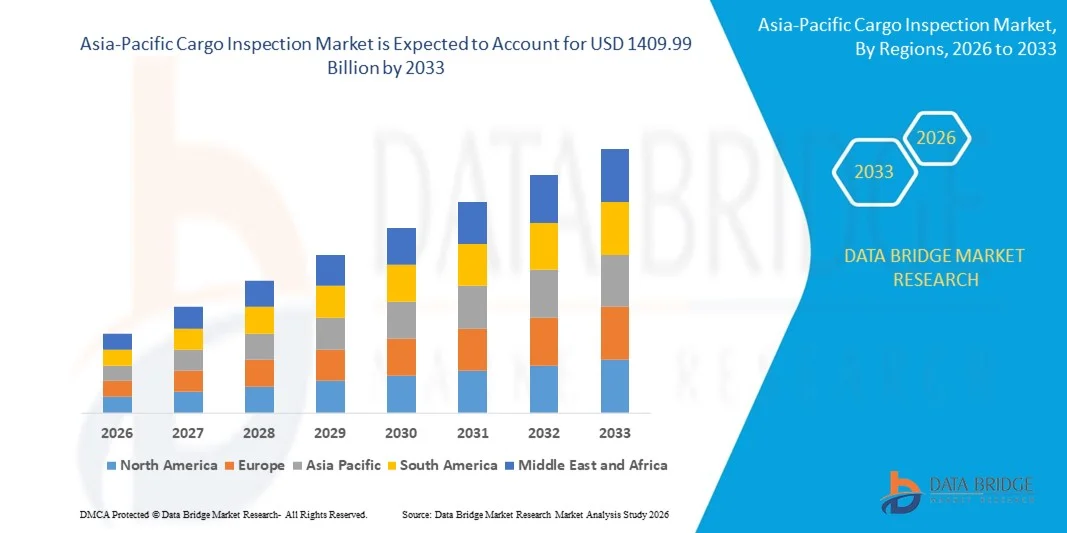
The Asia-Pacific Cargo Inspection Market refers to the services and technologies used to examine cargo shipments across multiple modes of transport — including air, sea, and land — to ensure regulatory compliance, safety, quality, and fraud prevention. Cargo inspection covers pre-shipment verification, documentation checks, non-intrusive scanning and sampling, and other processes required by customs authorities, regulatory bodies, and contractual quality standards.
In today’s interconnected global trade environment, the Asia-Pacific region plays a significant role in cargo movement due to its rapid industrialization, expanding manufacturing base, and expanding international trade corridors. This has positioned the region as one of the most dynamic and fastest-growing segments within the global cargo inspection landscape.
Market Overview and Growth Forecast
The Asia-Pacific cargo inspection market is experiencing robust growth, driven by rising international trade activities, infrastructure modernization, increasing regulatory obligations, and the adoption of advanced inspection technologies. Estimates suggest that the regional market was valued at approximately USD 923 million in 2024, and is projected to grow to around USD 1.34 billion by 2032, at a compound annual growth rate (CAGR) of nearly 6.2% through the forecast period.
Compared to other regions worldwide, Asia-Pacific stands out with one of the highest growth trajectories, reflecting increased trade flows, booming e-commerce sectors, and infrastructure investment across China, India, Southeast Asia, and Australia.
Key Market Drivers
1. Expansion of Intra-Regional and International Trade
The Asia-Pacific region is home to some of the world’s largest and fastest-growing economies, including China, India, Japan, South Korea, and the ASEAN nations. With these countries acting as major exporters of electronics, machinery, agricultural products, and consumer goods, demand for cargo inspection services has surged. Enhanced trade linkages — including free trade agreements like the Regional Comprehensive Economic Partnership (RCEP) — further ease cross-border movement of goods, thereby increasing the necessity for robust inspection practices to ensure compliance and facilitate clearance.
2. Stringent Regulatory Compliance and Quality Standards
As global trade volumes increase, regulatory agencies within Asia-Pacific countries are tightening inspection mandates to prevent smuggling, fraudulent documentation, and safety violations. Cargo inspection helps customs authorities validate shipment content, origin, quality, and safety compliance before goods enter international supply chains. This focus on regulatory adherence — especially for food, pharmaceuticals, and hazardous materials — fuels demand for certified inspection services.
3. Modernization of Ports and Logistics Infrastructure
Asia-Pacific has witnessed significant investment in logistics infrastructure, particularly port expansions and smart port initiatives. Large seaports in China, Singapore, India, and Indonesia are integrating automated cargo inspection systems to handle rising volumes efficiently. Non-intrusive inspection (NII) technologies — such as X-ray scanning, gamma ray imaging, and 3D container scanning — are increasingly being deployed to accelerate processing times while maintaining high accuracy and throughput.
4. Advancements in Technology
Innovation is reshaping the cargo inspection market. Adoption of AI-driven analytics, IoT-enabled sensors, robotics, drone-based inspection systems, blockchain for traceability, and cloud-based data platforms is enhancing the efficiency and reliability of inspection services. These technologies reduce manual intervention, increase detection accuracy, and provide near real-time visibility across the inspection process chain.
Market Segmentation
To understand the market dynamics in depth, the Asia-Pacific cargo inspection ecosystem can be segmented across multiple dimensions:
By Technology
-
Non-Intrusive Inspection (NII): Leveraging X-ray, gamma rays, and other radiation-based scanning technologies for container and cargo scanning without physical opening.
-
Nondestructive Evaluation (NDE): Physical inspection methods that do not affect cargo integrity, such as ultrasonic or visual inspection.
Non-intrusive inspection technologies are expected to hold the largest market share due to their efficiency in handling large shipment volumes and compliance requirements.
By Cargo Type
-
Agricultural Commodities
-
Oil & Gas
-
Metals & Minerals
-
Consumer Goods
-
Chemical Products
-
Others
The agricultural segment — including grains, produce, and perishables — is among the fastest growing categories in the region, driven by increasing export demands from countries like India, China, and Southeast Asian nations.
By Port Type
-
Sea Ports
-
Dry Ports
-
Inland Ports
-
Warmwater Ports
Sea ports dominate the inspection market, accounting for the bulk of cargo volume due to the maritime orientation of global trade flows in Asia-Pacific.
Regional Highlights and Country Insights
China
China remains a cornerstone of the Asia-Pacific cargo inspection market, driven by its massive manufacturing output, high export volumes, and strategic initiatives such as the Belt and Road Initiative that increase cargo throughput across participating countries. Investments in inspection infrastructure and automation are expanding rapidly to maintain trade security and quality control.
India
India’s logistics infrastructure is undergoing rapid transformation, supported by government initiatives that aim to modernize ports, improve customs procedures, and streamline trade compliance. Expansion of smart port projects and increased air and maritime cargo volumes are fueling demand for advanced cargo inspection services.
Southeast Asia
Countries in Southeast Asia — including Vietnam, Indonesia, Thailand, and Malaysia — have experienced robust growth in cargo traffic, particularly in electronics, textiles, and agricultural exports. Harmonization of inspection standards and the adoption of digital inspection platforms are key drivers of regional expansion.
Emerging Trends Shaping the Market
Integration of Digital and Cloud-Based Platforms
Cloud systems are increasingly being used for documentation verification, audit trails, and sharing inspection results between stakeholders. This improves transparency and traceability throughout the supply chain.
Blockchain for Traceability
Blockchain technology is gaining traction as a way to secure inspection records and ensure immutability of data — especially for high-value or regulated goods.
AI & Machine Learning Enhancements
AI enables predictive analytics for risk assessment, anomaly detection, and automated decision-making, enhancing cargo inspection quality and speed.
Challenges and Restraints
Despite the strong growth outlook, the Asia-Pacific cargo inspection market faces several challenges:
-
Heterogeneous Regulatory Frameworks: Variations in inspection standards across countries can create bottlenecks and delay clearance processes.
-
High Cost of Advanced Technology: Investment in cutting-edge equipment — such as deep learning software, sophisticated scanners, and drones — can be expensive, limiting adoption for smaller service providers.
-
Skilled Labor Shortage: Highly trained inspectors are needed to operate and interpret advanced inspection systems, yet such expertise remains limited in some emerging markets.
Competitive Landscape
The cargo inspection market is moderately fragmented, featuring major international players and regional specialists offering a range of services:
-
SGS
-
Bureau Veritas
-
Intertek Group
-
Cotecna Inspection
-
ALS Global
-
Alex Stewart International
-
Sandler & Travis Trade Advisory Services
-
Cargo Inspection Group Ltd.
These companies continuously invest in technology upgrades, strategic partnerships, and geographic expansion to strengthen their presence in Asia-Pacific and capture the growing demand for cargo inspection services.
Get More Details:
https://www.databridgemarketresearch.com/reports/asia-pacific-cargo-inspection-market
Future Outlook
The Asia-Pacific cargo inspection market is expected to sustain strong growth through the next decade, propelled by:
✔ Continued expansion of international and intra-regional trade
✔ Rapid adoption of digital inspection technologies
✔ Infrastructure investments in ports and logistics corridors
✔ Increasing regulatory scrutiny and compliance mandates
As cargo volumes continue to rise and global supply chains evolve, the need for efficient, precise, and secure cargo inspection services will remain critical, making Asia-Pacific a pivotal hub in the global cargo inspection landscape.

 English
 Arabic
 French
 Spanish
 Portuguese
 Deutsch
 Dutch
Dutch
 Italiano
 Russian
 Romaian
 Portuguese (Brazil)
 Greek
Greek